Green Initiative Kakuma
Cultivating Resilience in Arid Lands
Org Type: Regenerative Agriculture & Indigenous Knowledge
Green Initiative Kakuma (GIK) is a community-led organization dedicated to transforming the arid landscape of Turkana through sustainable agriculture and the preservation of traditional wisdom. By empowering a network of 168 smallholder vegetable farmers, GIK is building food security and climate resilience in one of the world’s most challenging environments.
Empowering the Next Generation
Our impact is driven by those most affected by the future of our climate. Of our 168 farmers:
74% are Youth and Women: We prioritize opportunities for young people (aged 18-35) and women, ensuring that economic growth in Kakuma is inclusive and forward-looking.
Micro-Scale Precision: Due to the extreme water limitations of the Turkana desert, our farmers manage an average of 1/4 acre each, utilizing high-efficiency techniques to maximize yield with minimal resources.
The Pillar of Indigenous & Contemporary Wisdom
Unique to GIK is our commitment to Traditional Ecological Knowledge (TEK). We believe the solutions to climate change already exist within our community’s history.
-
The Blend: We bridge the gap between ancient ecological wisdom held by our elders and contemporary scientific methods championed by our youth.
-
Pulitzer-Funded Climate Dialogues: We recently convened 110 participants (including 36 traditional knowledge holders and 74 youth) to facilitate climate dialogues, enhancing adaptation strategies for the pastoralist-dominated Turkana community.
Redefining Value through the SIR Farm Model
A Partnership to Benefit 168 Farmers
Green Initiative Kakuma integrates with the SIR Farm model by internalizing the social and environmental values that the traditional market ignores:
Positive Externalities: Green Initiative Kakuma is rewarded for preserving indigenous knowledge, sequestering carbon in arid soils, and providing social stability for refugee and host communities.
Negative Externalities: The SIR model helps offset the high “hidden costs” of operating in an arid environment, such as water scarcity and climate-induced migration risks.
Through this model, these factors are “internalized,” ensuring that farmers are rewarded for the total value they bring to the world, not just the raw weight of their crop.
Partnership Details
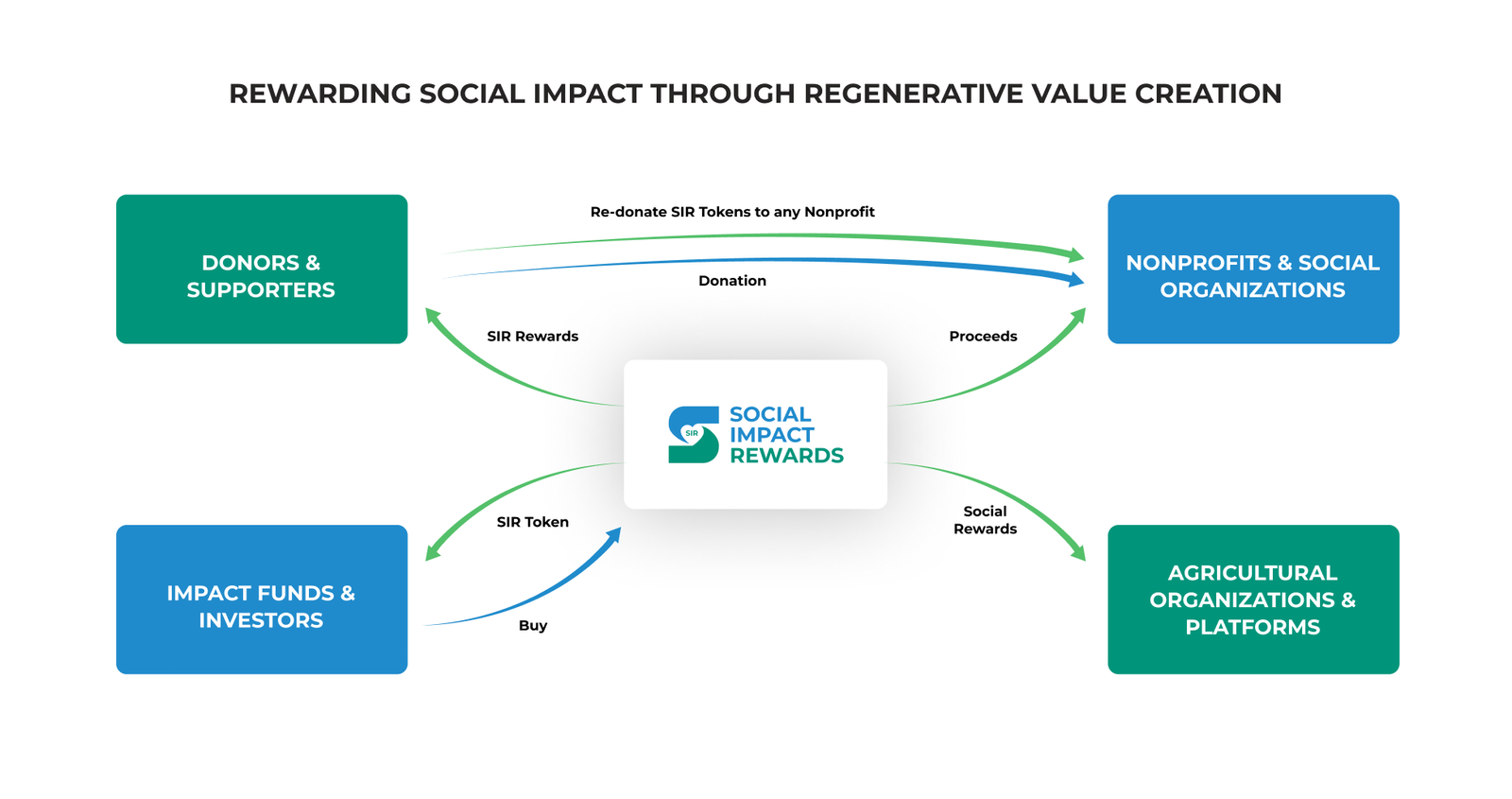
Green Initiative Kakuma has partnered with the Social Impact Rewards (SIR) platform to create a financial resilience layer for 168 smallholder vegetable farmers. This partnership focuses on bridging the economic gap for farmers operating in extreme arid conditions.
By onboarding these farmers onto the SIR ecosystem, Green Initiative Kakuma ensures that the social and environmental value created is recognized and rewarded, providing a secondary income stream that is independent of the challenges of desert cultivation.
Focus Areas
GIK operates at the intersection of food security and cultural preservation. Our core focus areas include:
-
Arid-Land Regenerative Agriculture
-
Indigenous & Traditional Ecological Knowledge
-
Youth & Women Empowerment
-
Climate Adaptation
Geographical Location
Founded and operated in Kakuma, Turkana County, Kenya with direct sourcing relationships and supply chains connected to African producers and suppliers.
Alignment with SIR
Green Initiative Kakuma is a prime example of the SIR model in action. Traditional markets often ignore the “hidden” values and costs of farming in a desert:
-
Internalizing Positive Externalities: GIK farmers provide essential services like carbon sequestration in dryland soils and the preservation of endangered indigenous knowledge. The SIR model ensures these “positive externalities” are quantified and rewarded.
-
Mitigating Negative Externalities: By utilizing high-efficiency, small-scale farming (1/4 acre average), GIK minimizes water waste and land degradation. SIR rewards this efficiency, helping farmers overcome the high costs of operating in a water-scarce environment.
-
Evidence-Based Impact: Our recent Pulitzer-funded project, which convened 110 youth and traditional knowledge holders, provides the verified “Social Impact” data that fuels the SIR reward mechanism.
Contact
For partnership enquiries via Social Impact Rewards, contact hello@sirgiving.org and mention “Green Initiative Kakuma”